

RTV Silicone Molds Explained: How the Right Mold Makes or Breaks a Urethane Casting Project
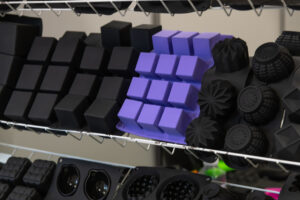
When most people think about urethane casting, they focus on the finished part. But the part is only as good as the mold it comes from. The RTV silicone mold sits at the center of every casting project, and getting it right is the difference between crisp, repeatable parts and a frustrating run of defects. At ProTek Models, the mold-making process is treated as the foundation of quality, not an afterthought.
What RTV Silicone Molding Actually Is
RTV stands for room-temperature vulcanizing, a type of silicone that cures at room temperature into a flexible, durable mold. The process starts with a master pattern, usually 3D printed and then finished to the exact surface texture the final part requires. That pattern is suspended in a frame, and liquid silicone is poured around it. Once the silicone cures, the mold is cut open and the pattern removed, leaving a precise negative cavity ready for casting urethane.
The flexibility of silicone is what makes it so valuable. Unlike rigid tooling, an RTV mold can flex enough to release parts with undercuts, fine detail, and complex geometries that would be impossible to pull from a hard mold. That single property opens the door to part designs that injection molding simply can’t accommodate without expensive, multi-piece tooling.
Why the Master Pattern Determines Everything
A silicone mold captures every detail of the master pattern, including the flaws. A scratch, a layer line, or a rough patch on the pattern will be reproduced on every part the mold produces. This is why pattern finishing is such a critical step. Whether a project calls for a glassy smooth surface or a specific leather or textile grain, that finish has to be perfected on the master before the silicone is ever poured.
This is also where casting quality is won or lost. A meticulously finished pattern paired with skilled mold-making yields parts that are often indistinguishable from injection-molded counterparts. A rushed pattern produces parts that need extensive rework or get scrapped entirely.
How Mold Quality Affects the Full Production Run
A well-made RTV mold can produce anywhere from one part to hundreds, depending on the material and part geometry. But mold quality directly affects how many usable parts come out before the cavity degrades. Trapped air, poor venting, or an improperly designed parting line introduces bubbles and surface imperfections that compound over a run.
The team at ProTek Models addresses this with production-grade vacuum casting machines and pneumatic injection equipment that prevent air from entering the material during the pour. The result is parts that are virtually bubble-free and consistent from the first cast to the last. For projects that need extremely fine detail or challenging geometries, this level of control is what separates a prototype-grade mold from one ready for genuine low-volume production.
Matching the Mold to the Project
Not every project needs the same approach. Simple parts may come from a straightforward two-piece mold, while complex assemblies might require multi-part molds with carefully planned parting lines and gating. Molds can also be built for parts up to eight feet in length, which means even large components can be cast rather than fabricated by hand.
The key is planning the mold strategy before the first pour. Material choice, part volume, finish requirements, and geometry all feed into how the mold should be designed.
Start Your Casting Project the Right Way
A great urethane part begins with a great mold. If you have a casting project on the horizon, the experts at ProTek Models can help you plan the right mold strategy from the start. Call (832) 968-6636 to discuss your specifications and get a free quote.