

Large-Format 3D Printing: How Engineers Produce Oversized Parts Without Traditional Manufacturing Limits
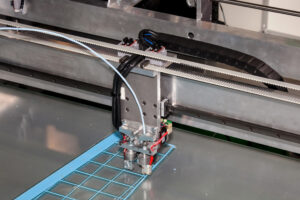
For many engineers and product developers, creating large parts has traditionally meant navigating expensive tooling, long lead times, and strict manufacturing constraints. Conventional fabrication methods such as CNC machining or injection molding can become extremely costly when working with oversized components, complex geometries, or low production volumes.
Large-format 3D printing is changing that equation. By allowing manufacturers to produce big, complex parts quickly and efficiently, additive manufacturing technologies are removing many of the limitations associated with traditional production methods. At ProTek Models, large-format FDM 3D printing makes it possible to build functional parts, prototypes, and assemblies that would otherwise be difficult or expensive to manufacture.
What Is Large-Format 3D Printing?
Large-format 3D printing refers to additive manufacturing systems capable of producing parts with significantly larger build volumes than standard desktop printers. Industrial-grade machines allow engineers to print large assemblies, structural components, tooling, and production parts in a single build rather than assembling multiple smaller pieces.
This capability is especially useful for industries where large parts are common, including:
- Automotive manufacturing
- Aerospace development
- Industrial equipment production
- Architecture and construction modeling
- Transportation and heavy machinery
With large-format FDM systems, engineers can design parts based on performance needs rather than being restricted by the size limitations of conventional manufacturing processes.
Why Traditional Manufacturing Struggles with Large Parts
Traditional production methods often create challenges when parts exceed certain sizes. Large molds for injection molding or large CNC machining operations can dramatically increase production costs. Tooling alone may require months of development and thousands of dollars before a single part is produced.
Additionally, machining large parts from solid materials often results in significant waste. Complex geometries may require multiple manufacturing steps or specialized equipment.
Large-format additive manufacturing eliminates many of these obstacles by building parts layer by layer using engineering-grade thermoplastics.
Advantages of Large-Format FDM Printing
Large-format FDM printing offers several advantages that make it ideal for oversized components and assemblies.
Reduced Manufacturing Costs
Without the need for expensive tooling, engineers can produce large components at a fraction of the cost of traditional manufacturing methods.
Rapid Turnaround Times
Parts that might take weeks or months to fabricate using conventional processes can often be produced in days using industrial 3D printing.
Complex Geometry Capabilities
Additive manufacturing allows for internal channels, lightweight lattice structures, and complex shapes that would be difficult or impossible to create with machining.
Functional End-Use Parts
High-performance thermoplastics used in FDM printing provide strength, heat resistance, and durability suitable for real-world applications.
Common Applications for Large 3D Printed Parts
Large-format printing supports a wide range of applications across multiple industries. Engineers frequently rely on this technology for:
- Functional prototypes for testing large systems
- Manufacturing fixtures and tooling
- Automotive components and aerodynamic testing parts
- Architectural and display models
- Low-volume production components
Because the process allows quick iteration, designers can refine and improve parts before committing to full-scale production.
Engineering Materials Built for Performance
One of the biggest advancements in large-format FDM printing is the availability of high-performance materials. Engineering-grade thermoplastics such as Ultem, Nylon composites, polycarbonate blends, and other advanced materials offer strength and durability suitable for demanding applications.
These materials allow engineers to produce components that can withstand mechanical stress, high temperatures, and harsh operating environments. In many cases, printed parts can function as permanent production components rather than just prototypes.
From Prototype to Production
Large-format 3D printing bridges the gap between design and manufacturing. Engineers can quickly produce concept models, validate designs through physical testing, and transition to low-volume production without the long delays associated with tooling and traditional fabrication.
Because the process is highly flexible, design teams can explore multiple iterations and refine products faster than ever before. This leads to improved performance, fewer design flaws, and faster time to market.
At ProTek Models, our experienced team works closely with engineers, designers, and manufacturers to produce high-quality large-format 3D printed parts using advanced industrial equipment and engineering-grade materials.
If you’re developing large components, functional prototypes, or low-volume production parts, contact ProTek Models at (832) 968-6636 to discuss your project and learn how large-format 3D printing can streamline your manufacturing process.