

Why DLP/SLA 3D Printing Is Now a Viable Option for Production-Grade Parts — Not Just Prototypes
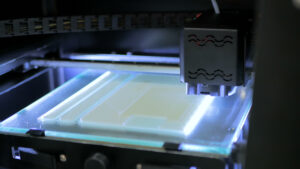
For years, SLA (Stereolithography) 3D printing carried a mixed reputation. Engineers loved it for surface finish and fine detail, but they knew the drawbacks all too well: brittle parts, poor UV stability, heat sensitivity, and a tendency to degrade quickly under real-world conditions. It was a prototype-only technology — useful for showing a concept, but not trusted for anything that needed to perform.
That reputation is now outdated. Advances in resin chemistry and 3D printing technology have fundamentally changed what DLP/SLA can do. At ProTek Models, we adopted this technology in 2021 specifically because we saw those limitations being solved — and today, we’re producing parts that hold up in demanding production environments.
What Changed in DLP/SLA Technology
The biggest shift came from two directions: better materials and faster machines.
On the materials side, production-grade resins from leading suppliers like Henkel, BASF, Covestro, Evonik, and Arkema have replaced the fragile photopolymers that gave SLA its bad name. Today’s resin options include flexible elastomeric materials, high-impact polymers, engineering-grade resins comparable to ABS, and even xPEEK — a material with a heat deflection temperature of 460°F (238°C). That kind of thermal performance was unthinkable in resin 3D printing a decade ago.
On the speed side, a technology called LSPc (Lubricant Sublayer Photo-curing), developed by NEXA3D, changed the game entirely. With print speeds of up to .393 inches (1 cm) per hour in the Z-axis, LSPc dramatically reduces production time compared to traditional SLA. ProTek Models runs NEXA3D NXE400 printers specifically because of this combination of speed and material versatility.
What Production-Grade Really Means
There’s a difference between a part that looks like it could be used in production and a part that actually can. Production-grade DLP/SLA parts from ProTek Models are engineered with end-use applications in mind — not just design review or shelf display.
Depending on the material selected, parts can feature outstanding surface finish, high elongation and impact resistance, flexibility for snap-fit and vibration-prone applications, chemical resistance, and high-temperature stability. Material selection is one of the most important decisions in the process, and our experienced team works with each client to match the right resin to their application, load conditions, and environment.
For functional prototyping, jigs and fixtures, on-demand manufacturing components, and low-volume production runs, DLP/SLA is now a legitimate option — not a compromise.
Post-Processing and Finishing
Another advantage of working with ProTek Models is that we don’t stop at the printer. Our team offers finishing and painting services for DLP/SLA parts, which allows us to deliver components that are ready for presentation, testing, or immediate use. Whether the end goal is a market-ready appearance model or a functional assembly, we handle the complete workflow in-house.
When to Consider DLP/SLA for Your Next Project
DLP/SLA is an excellent fit when your project requires tight tolerances, fine surface detail, or smaller-to-medium part sizes with strong material properties. It works particularly well for functional prototypes that need to move through testing quickly, display models where aesthetics matter, parts requiring flexible or elastomeric behavior, and injection molding tools produced at a fraction of the lead time.
If your past experience with SLA left you skeptical, it’s worth taking another look. The technology has changed substantially, and so have the results.
To learn whether DLP/SLA 3D printing is the right fit for your project, contact ProTek Models at (832) 968-6636. Our team is ready to walk you through your options and get your quote started.